Farmer’s First
Our Operating Philosophy.
Farmer’s First
Our farmers come first. Not as a slogan, but as the principle behind every choice we make at Nourish. What started with two farms in Bhaluka, Mymensingh in 2008 has grown into a national network of partnerships, and Farmer’s First has guided how we work, what we build, and how we define success.
Every decision is tested against one question. Does this make our farmers stronger?
“Our success is inseparable from the success of our farmers.”
Every business measures Return on Investment. We measure two.
- Return on Investment: The financial discipline that ensures we can keep our promises to the farmers who work with us.
- Return on Integrity: The trust, loyalty, and reputation we build through principled action, even when it costs us in the short term. The strength no competitor can replicate.
The first sustains us. The second is what makes us Nourish.
The Partnership
The Partnership
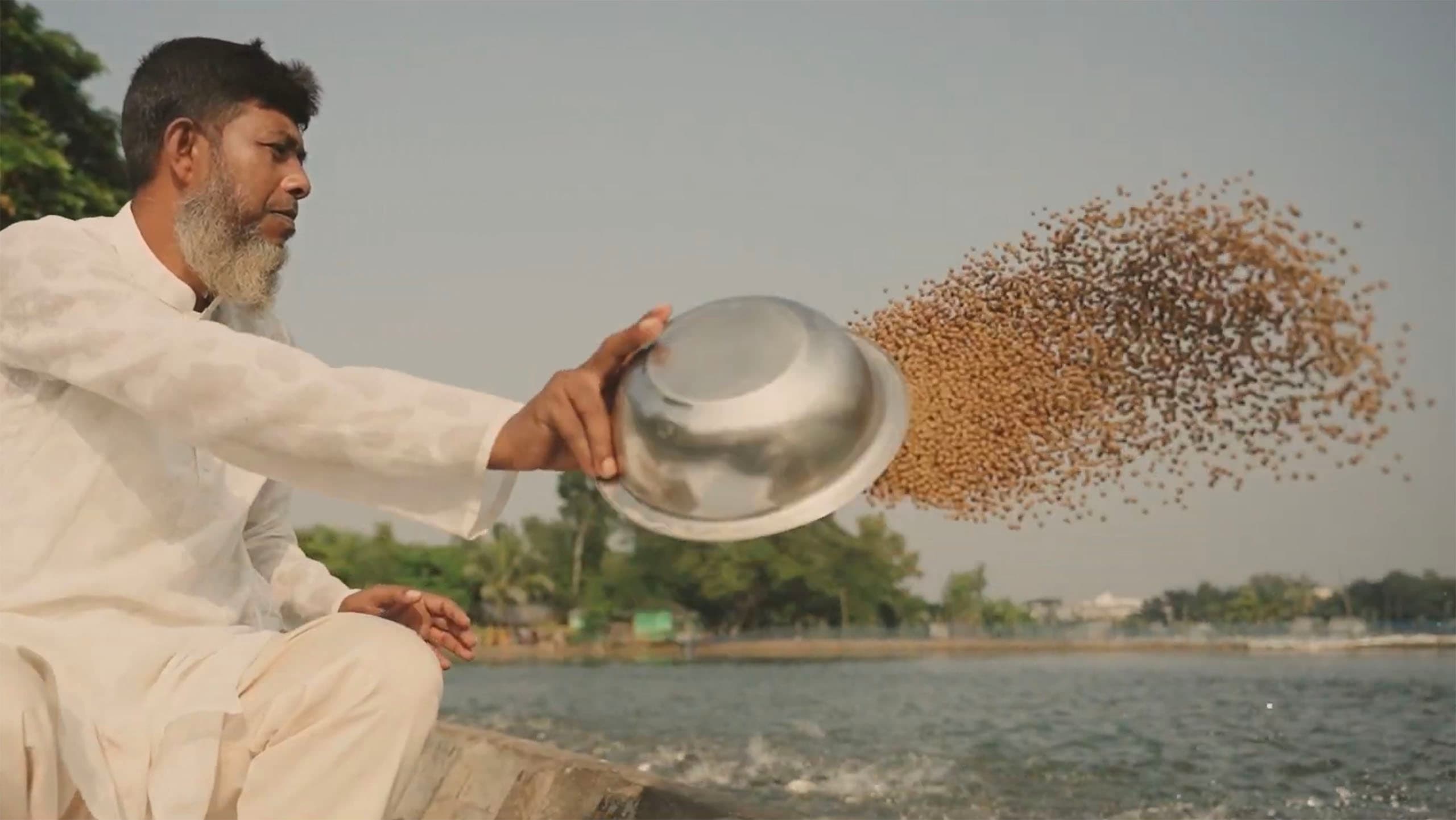
A risk-free model, by design. We provide the day-old chicks, the feed, the vaccines, and the technical support. The farmer provides the building, the labour, and the daily care. At the end of the cycle, we lift the birds and pay the farmer based on how they were raised, not on the prices the market happened to be paying that week.
The farmer does not bear the market risk. That is the principle. Everything else is operations.
- Seven Operational Units: Spanning Mymensingh, Gazipur, and Jessore. Each unit serves a cluster of contracted farms managed by a local Unit In-charge who knows the farmers personally.
- 15,000 Farmers in Our Ecosystem: Across Bangladesh, with a target of 50,000 individuals engaged through Nourish by 2028, including at least one in three women.
- 1,500+ Dealers Across the Network: Bringing inputs, expertise, and support within reach of farmers in the villages and small towns where they live and work.
- 23 Regions, 10 Zones: Our distribution network is organised across 23 regions in 10 zones nationwide. This is the operating infrastructure that makes Farmer’s First real in the field, not just on paper.
A flagship multi-stakeholder partnership. In collaboration with the World’s Poultry Science Association Bangladesh Branch (WPSA-BB) and Paragon, we support 300 women-led smallholder farms across six districts of Bangladesh through a structured three-year programme.
- Risk-Free Income: A guaranteed growing charge protects every farmer regardless of market conditions. The principle that The farmer should never be a loser.
- Structured Training: Day-long technical and business skills training before the first batch of chicks is delivered, supported by ongoing field-level mentoring.
- Biosecurity That Earns: A 25-point compliance checklist scored at every batch, with high-scoring farms earning a meaningful bonus on top of their growing charge. Biosecurity becomes a direct income line for the farmer, not a cost imposed on her.
- Climate-Smart Practices: Training and farm renovation aligned with climate resilience, designed for the conditions Bangladeshi farmers actually work in rather than imported from elsewhere.
“The farmer should never be a loser.”
A network built farmer by farmer. Our roadmap stands with 3,000 trained, Registered farmers, the foundation of every premium product Nourish brings to market. The certification pathway is built so the farmer benefits as much as the brand: better technical knowledge, better operating standards, better income stability, better recognition.
- 100 Commercial Layer Farmers: Anchor partners in our layer segment, nurtured for long-term collaboration.
- 500 Mid-Sized Broiler Farmers: Scale-up partners with structured technical support and growth pathways.
- 3,000 Registered Network Farmers: Trained, Registered, and integrated into our quality standards. Farmers whose work anchors what Nourish is becoming.
Genetics for Our Farmers
Bornali
A farmer in Mymensingh works in different conditions than a farmer in Europe. Most colour-bird parent stock used in Bangladesh is imported. The birds are bred for climates that are not ours, for disease environments that are not ours, for housing infrastructure that is not ours. They perform here in spite of themselves, not because of themselves. And the farmer pays for that mismatch in mortality, in feed costs, in stress on the flock.
We saw this as something to change. For our farmers.
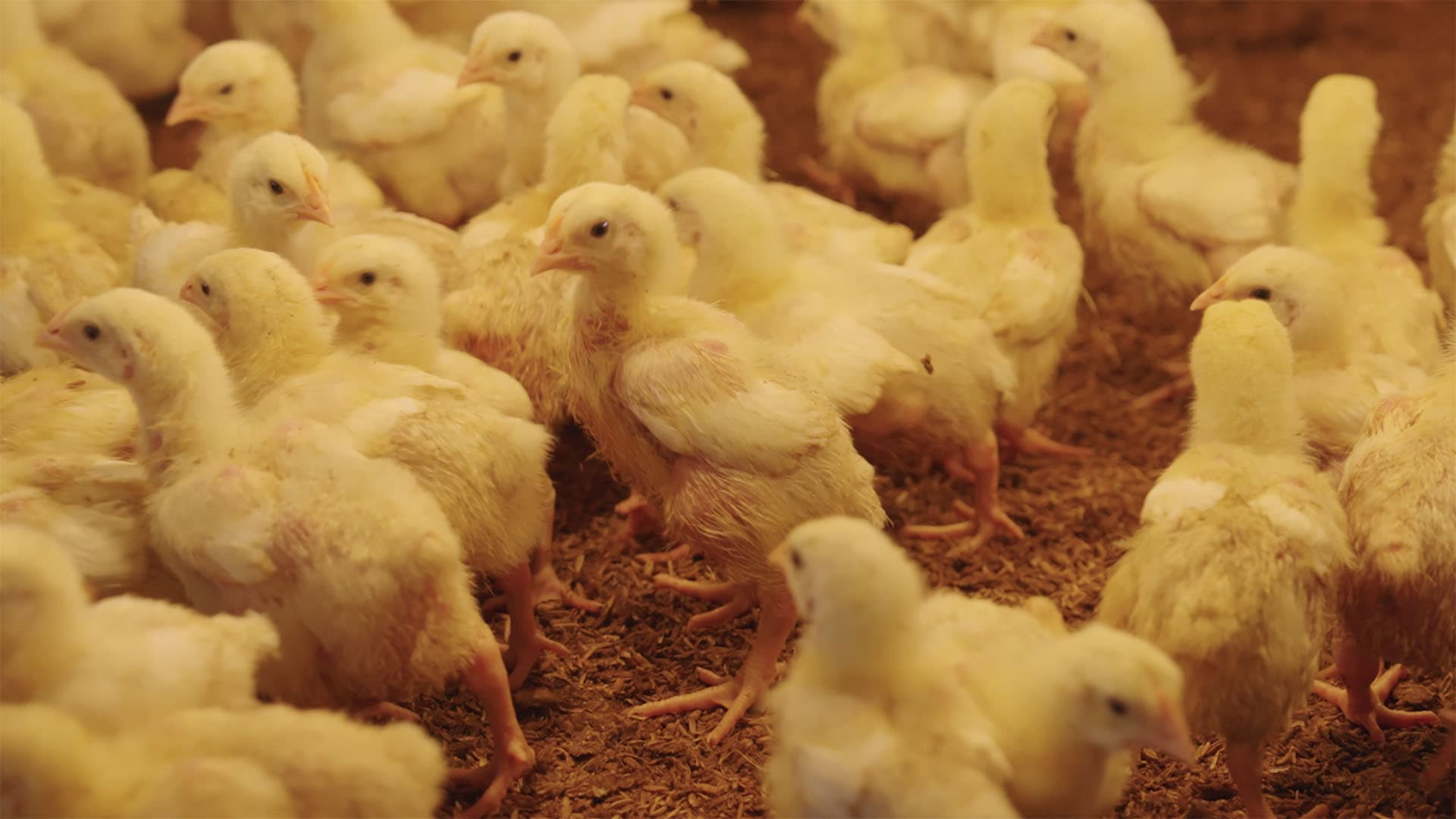
A breed engineered for Bangladesh. Through the disruption of the pandemic in 2019–20, a small team at Nourish began the work that would become Bornali, our proprietary indigenous colour-bird breed, designed for the conditions Bangladeshi farmers actually face.
- Climate Resilience: Bred for the open-house environments where most smallholders work, where internal shed temperatures can reach 42°C in peak summer.
- Disease Resistance: Engineered against the locally circulating disease strains that put farmer flocks at risk.
- Housing Match: Built for the housing infrastructure most farmers will work with for decades to come, not for controlled-environment poultry houses found elsewhere.
- Better Farmer Outcomes: A bird that is built for our country is a bird that performs better for the farmer raising it.
A faster cycle for farmers who need one. Building on the Bornali foundation, Bornali Plus is engineered for accelerated growth while preserving the climate and disease resilience of the original strain. It is designed for farmers seeking a shorter cycle without compromising on local adaptation.
The roadmap is staged.
- By 2027: Substitute one of our imported parent flocks with the locally developed Bornali flock. The first measurable step from import dependence toward a domestic genetic supply for our farmers.
- By 2029–30: Halt foreign colour parent stock imports entirely. Full domestic self-sufficiency, with every Nourish farmer supplied from breeds developed in Bangladesh, for Bangladesh.
“Genetics built here, for the farmers who feed this country.”
Building Farms That Work for Farmers
Model Farms
The next generation of Nourish farms. Across our portfolio, we are building three kinds of Model Farms, each one designed around what the farmer needs to thrive. They are not the same thing. They are connected by a shared conviction: that the operating standard for what a Nourish farm can be is set, and held, by what works for the farmer.
The Nourish Model Farm Development Project
Building on what our farmers have taught us. Today, our seven Integration units across Mymensingh, Gazipur, and Jessore work with hundreds of farmers under the principles of risk-sharing, full input provision, and market protection. We are now designing the next chapter. The Model Farm Development Project is our vision for taking those same principles further, with substantially modernised infrastructure that better serves the farmer.
- Better Infrastructure for the Farmer: Modernised housing, verifiable biosecurity, and antibiotic-free protocols. The aim is to protect the farmer's flock from heat stress, disease pressure, and the operational vulnerabilities of older shed designs.
- Direct Buy-Back, No Middlemen: The vision is for output to reach consumers through dedicated Nourish Broiler Outlets, connecting the farmer's work to the household plate without the layers of intermediation that have historically eroded farmer income.
- A Long-Term Vision: The Project envisions a network of modernised farms across multiple districts of Bangladesh, beginning in the northern divisions where the case is strongest. The design is grounded in fifteen years of working knowledge from our Integration network. The rollout is the work of years ahead, not months.
Showing what is possible at smallholder scale. Within our partnership with the World’s Poultry Science Association Bangladesh Branch (WPSA-BB) and Paragon, 30 demonstration farms anchor best practice within the broader 300-farmer cohort. They show that the standards we set with women smallholders, biosecurity-compliant, climate-smart, women-led, are operationally achievable in real farming conditions, not just aspirational.
A new model where the farmer holds equity. We are exploring a tripartite financing structure for layer farms, bringing a banking partner into the conventional farmer-company relationship so the farmer is not just a contracted operator but a co-owner of the operation she works. The concept is at proposal stage. The principle is direct: Farmer’s First applied to ownership, not just to pricing.
Different farmers need different things. The farmer who has been with us for fifteen years through Integration is not in the same position as the woman smallholder beginning her journey through the WPSA programme, who is not in the same position as the farmer ready to step into ownership of a layer operation. We meet each one where she is.
“Farms built around the people who run them.”
“Farmer’s First isn’t something we do at Nourish. It’s who we are.”